In the fast-paced world of facility management, time is the single most valuable resource. Every minute a cleaning crew spends pushing a mop is a minute taken away from more critical, detail-oriented tasks. The inefficiency of manual cleaning lies not just in the physical labor, but in the logistics: coordinating shifts, managing breaks, and ensuring that routine tasks actually happen on schedule. Commercial mopping robots are dismantling these bottlenecks. By leveraging advanced scheduling and smart autonomy features, they are transforming floor care from a daily logistical headache into a seamless, "set-it-and-forget-it" operation.
The true value of these robots isn't just that they clean; it's that they manage their own time. They operate on a digital schedule that doesn't drift, doesn't get tired, and doesn't require constant supervision.
The Power of "Set and Forget" Scheduling
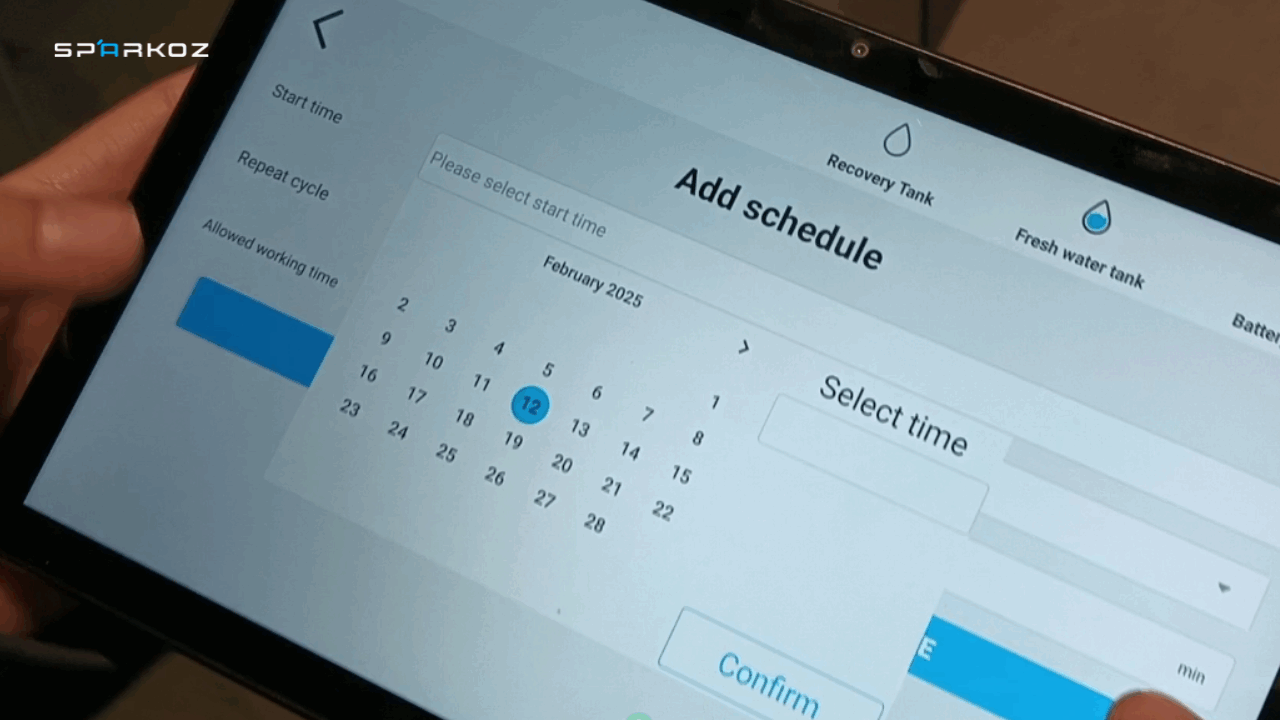
The cornerstone of this efficiency is the robot's programmable schedule. Unlike a human worker who needs a supervisor to assign tasks daily, a robot like the Sparkoz TN10-Pro runs on a rigorous, pre-defined timetable.
Through an intuitive interface, facility managers can map out an entire week's worth of cleaning missions. You can program the robot to scrub the main lobby every morning at 2:00 AM, vacuum the hallways at 10:00 AM, and perform a light dust mop of the cafeteria at 3:00 PM. Once this automated cleaning schedule is set, the robot executes it flawlessly.
This capability allows for "ghost cleaning"—operations that happen entirely outside of business hours. By the time staff and customers arrive in the morning, the heavy lifting is already done. This not only saves time but also eliminates the disruption of having cleaning crews working around foot traffic.
Intelligent Autonomy: Breakpoint Continuation
One of the biggest time-wasters in manual cleaning is the interruption. A worker runs out of water, stops to refill, gets distracted by a conversation, or takes a break, and momentum is lost. Commercial mopping robots handle interruptions with cold, calculated efficiency through a feature known as "Breakpoint Continuation."
Here is how it works: If a robot is in the middle of cleaning a massive 50,000-square-foot warehouse and its battery drops to a critical level, it doesn't just stop and wait for help. It intelligently pauses its mission, records its exact GPS coordinates on the digital map, and autonomously navigates back to its charging pile.
Once it has recharged (and refilled/drained its tanks if connected to a workstation), it doesn't start over from the beginning. It returns to the exact coordinate where it paused and resumes the job. This smart feature in cleaning robots ensures that no time is wasted re-cleaning areas that were already done, and it guarantees 100% completion of the task without human intervention.
Auto-Charging and Self-Maintenance
For a robot to be truly time-saving, it must be self-sufficient. The days of having to "plug in" a machine are over. Modern autonomous units are designed with auto-charging capabilities. When a mission is complete, or when power is low, the robot seeks out its docking station automatically.
Advanced workstations take this a step further by automating the "pit stop." They can automatically drain the robot's dirty water tank and refill it with fresh water and cleaning solution. This dramatically reduces the "human touch time" required to keep the robot running. Instead of spending 30 minutes preparing a machine, a staff member might only need to inspect it once a day or even once a week, depending on the setup.
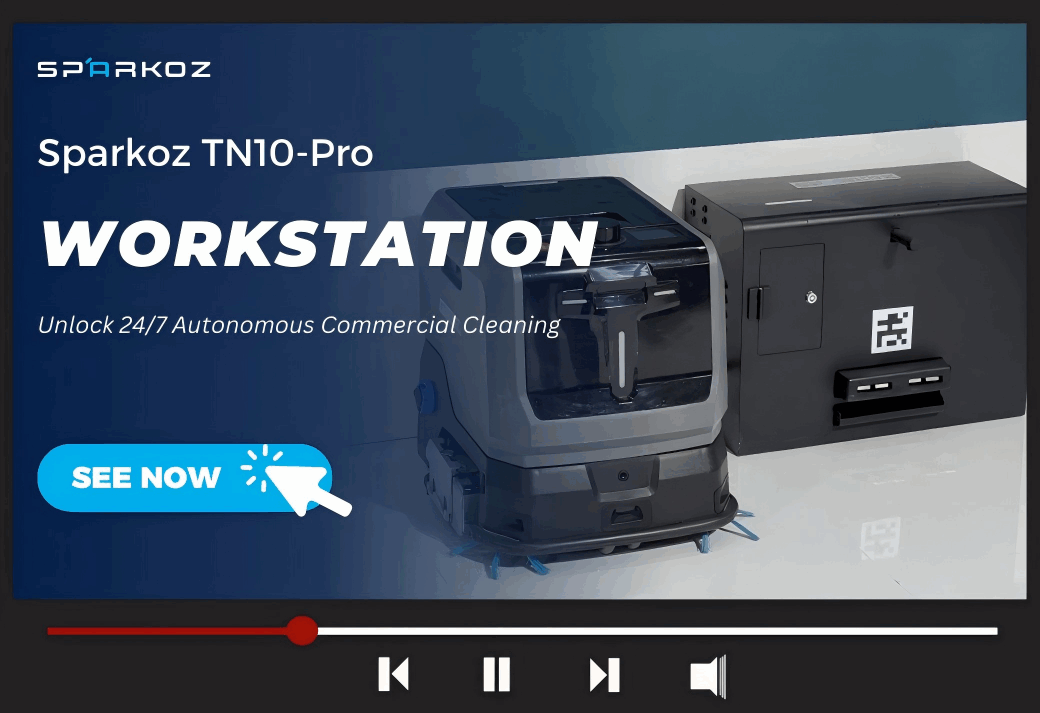
Explore the video and unlock 24/7 Autonomous Commercial Cleaning with TN10-Pro's new workstation.
Optimizing the Human Workflow
By offloading the scheduling and execution of floor mopping to a robot, you are essentially gifting hours back to your human team. This allows for a strategic reallocation of labor.
Instead of spending four hours pushing a scrubber, a janitor can spend that time on:
● Vertical Cleaning: Wiping down windows, dusting shelves, and cleaning walls.
● Sanitation: Disinfecting high-touch points like door handles and elevator buttons.
● Detail Work: Cleaning baseboards, vents, and corners that machines can't reach.
This doesn't just save time; it improves the overall quality of the facility. The robot handles the bulk work, while the human handles the detail work.
Conclusion: Reclaiming the Clock
Investing in commercial mopping robots is fundamentally an investment in time management. These machines strip away the inefficiencies of manual scheduling, breaks, and shift changes. They work consistently, manage their own energy needs, and adhere to a strict timetable that ensures your facility is always presentation-ready.
For businesses looking to maximize productivity, the question is no longer "can we afford a robot?" but rather "can we afford the wasted time of manual mopping?" The answer, increasingly, is no.
To see how programmable autonomy can streamline your operations, review the scheduling capabilities of Sparkoz robots.