In the world of robotics, there is a distinct chasm between "automated" and "autonomous." An automated machine repeats a pre-programmed set of actions blindly, regardless of changes in its environment. An autonomous machine, however, perceives, thinks, and acts. This leap from repetition to reasoning is driven by Artificial Intelligence (AI). As we look toward the future of facility management, the role of AI in autonomous cleaning robots is becoming the defining factor that separates legacy equipment from the next generation of smart infrastructure.
For facility managers and technology investors, understanding this distinction is crucial. It explains why some robots get stuck behind a moved chair while others, like the solutions engineered by Sparkoz, seamlessly navigate dynamic, bustling environments. The future is not just about robots that clean; it is about robots that understand the world they are cleaning.
From Blind Repetition to Intelligent Perception
The earliest cleaning robots were essentially "blind." They relied on physical bumpers or simple sonar to turn away from walls, often bouncing randomly until the battery died. The current generation of AI in autonomous cleaning robots utilizes a technology stack that mimics human perception.
At the core of this is SLAM (Simultaneous Localization and Mapping). This AI-driven process allows a robot to enter a new environment—be it a school hallway or a manufacturing floor—and construct a map in real-time while simultaneously figuring out where it is located within that map. But true autonomy goes beyond just knowing where walls are.
Semantic Segmentation: Knowing What You See
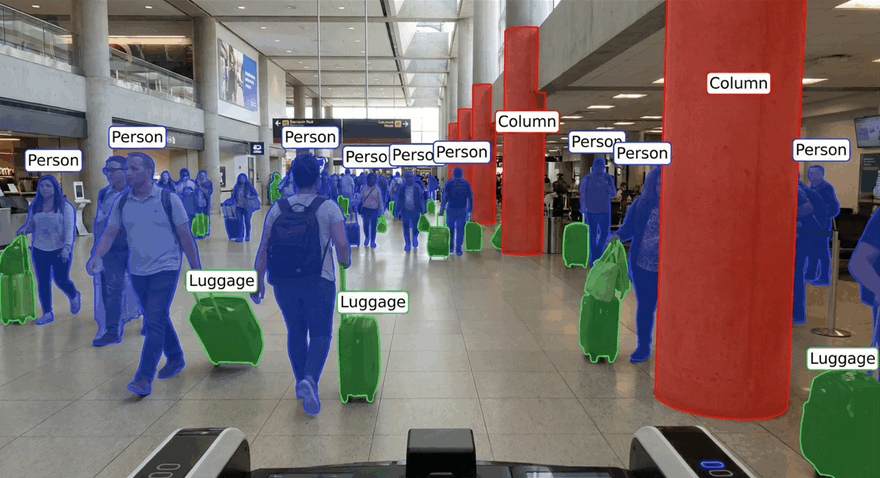
Advanced AI uses a process called semantic segmentation. Through deep learning algorithms and computer vision, the robot classifies the pixels it sees. It doesn't just see "an obstacle"; it distinguishes between a "person" (who will move), a "pallet" (which might be moved later), and a "structural column" (which is permanent).
This level of machine learning in facility management allows the robot to make intelligent decisions. If it sees a person, it might slow down and signal. If it encounters a temporary blockage, it can calculate a detour rather than just stopping and waiting for help.
The Brain of the Operation: Dynamic Path Planning
In the future of robotic cleaning, efficiency is king. Traditional automation follows a fixed track, like a train. If that track is blocked, the machine stops. AI enables dynamic path planning.
Imagine a large airport terminal. A sudden rush of passengers creates congestion in a specific aisle. A pre-programmed robot might plow through or get stuck. An AI-driven robot, analyzing real-time data from its LiDAR and depth cameras, recognizes the congestion. It can then actively re-route itself to clean a quieter section of the terminal first, returning to the busy area once the crowd has dispersed. This ability to adapt on the fly ensures that cleaning goals are met regardless of the unpredictability of human activity.
The Hive Mind: Cloud Computing and Fleet Learning
One of the most powerful aspects of AI is that it allows robots to learn from each other. This concept, often called "fleet learning," is powered by cloud connectivity.
When one robot in a fleet encounters a new type of layout change or a specific navigational hazard, that data can be processed in the cloud and shared with other units. For facilities managing multiple buildings or large campuses, this means the cleaning network gets smarter over time. The data collected contributes to a cycle of continuous improvement, where the cleaning algorithms are refined based on real-world scenarios rather than static code written in a lab.
Furthermore, this connectivity enables predictive maintenance. Instead of waiting for a part to fail, the AI monitors the robot's internal telemetry—motor temperature, battery voltage curves, water flow rates. It can predict when a component is showing signs of wear and alert the maintenance team before a breakdown occurs, ensuring maximum uptime.
Safety Through Prediction
Safety is the paramount concern when introducing heavy machinery into public spaces. Here, the role of AI in autonomous cleaning robots shifts from efficiency to protection.
Standard safety sensors react: "If bumper hits object, stop." AI safety systems predict: "Trajectory of object A intersects with my path in 2 seconds; slow down now."
By analyzing the vector and speed of moving objects (people, forklifts, gurneys), the robot's AI can anticipate potential collisions before they happen. This predictive capability is essential for deploying robots in high-risk environments like hospitals or busy retail stores, where reaction time alone is not enough.
Conclusion: The Era of the Thinking Robot
As we move forward, the definition of a "cleaning tool" is expanding. We are no longer talking about motorized mops; we are discussing intelligent, data-gathering mobile IoT devices. The integration of AI in autonomous cleaning robots is transforming them from passive servants into active, thinking partners in facility maintenance.
For businesses, this means investing in technology that adapts to their needs rather than forcing them to adapt their operations to the machine. It promises a future where cleaning is not just automated, but truly autonomous—self-managing, self-optimizing, and seamlessly integrated into the flow of daily life.
To see how Sparkoz is leveraging these advanced AI technologies today, visit our Technology innovation page.