In the hierarchy of cleaning tasks, dusting often falls to the bottom of the list. It is tedious, time-consuming, and frequently neglected in favor of more visible tasks like floor scrubbing or trash removal. Yet, dust is more than just an aesthetic nuisance. In commercial environments—from open-plan offices and school libraries to museum galleries—accumulated dust is a primary vehicle for allergens, respiratory irritants, and unsightly buildup.
While heavy-duty scrubbers handle the grime, a commercial-grade dusting robot is the specialist required for maintaining air quality and surface presentation. But not all robots are created equal. When selecting a machine for this delicate but critical task, there are specific features you must prioritize to ensure it delivers a true industrial-grade clean.
1. The Cleaning Mechanism: Pad vs. Vacuum (or Both)
The most fundamental feature to evaluate is how the robot removes dust. Unlike scrubbing, which uses water and friction, effective dusting requires a different approach.
● Microfiber & Static Attraction: Look for robots that utilize industrial-grade microfiber dust mops. These pads generate a static charge as they glide across the floor, attracting and holding onto fine particulate matter like magnets. This is far superior to traditional brooms, which often just sweep dust into the air.
● Integrated Vacuum Suction: The best systems combine a dust mop with vacuum suction. This "sweep and suck" mechanism ensures that larger debris is collected while the microfiber pad polishes the floor and captures microscopic allergens.
● Edge-to-Edge Capability: Dust tends to migrate to the edges of a room. A high-quality commercial dusting robot must have sensors and programming that allow it to hug walls and corners tightly, ensuring no "dust bunnies" are left along the baseboards.

2. Low-Profile Navigation and Agility
Dust loves to hide where people can't reach. A key differentiator between a standard floor scrubber and a dedicated dusting unit is agility.
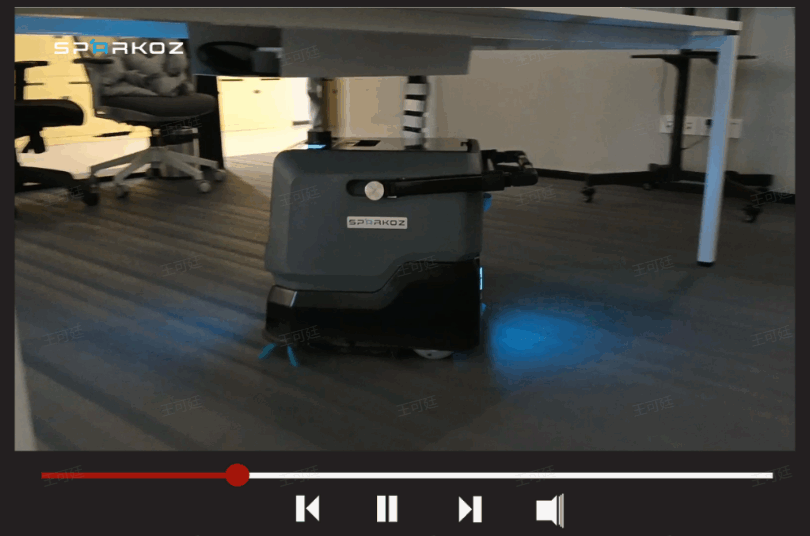
● Height Clearance: One of the main reasons to automate dusting is to clean under furniture—desks, conference tables, and display cabinets—without requiring staff to move heavy items. When evaluating a robot, check its vertical clearance. A compact, low-profile design allows the machine to glide effortlessly under obstacles, sanitizing the "hidden" areas that act as reservoirs for allergens.
● Complex Obstacle Avoidance: Dusting often happens in cluttered environments like office workspaces or classrooms. The robot's navigation system must be sophisticated enough to weave around chair legs and temporary obstructions without getting stuck or causing damage.
Check the video and discover how TN10-Pro clean in the narrow space.
3. Filtration Efficiency: The HEPA Standard
If a robot picks up dust only to blow fine particles back out through its exhaust, it creates a health hazard, not a cleaning solution.
● HEPA Filtration: For any commercial setting concerned with indoor air quality (IAQ), High-Efficiency Particulate Air (HEPA) filtration is non-negotiable. A HEPA filter captures 99.97% of particles as small as 0.3 microns. This ensures that the robot is actually purifying the environment, trapping pollen, dander, and dust mites securely inside the machine.
● Sealed Dustbins: Look for systems with easy-to-empty, sealed dustbins that minimize the user's exposure to the collected dust during disposal.
4. Operational Silence
Dusting is frequently a "daytime cleaning" task. Unlike heavy scrubbing, which might be relegated to the night shift, dusting often needs to happen while a facility is occupied to maintain a pristine appearance throughout the day.
● Decibel Levels: Check the noise specification. A top-tier commercial-grade dusting robot should operate at a whisper-quiet level (often below 60 dB), allowing it to work in a library, a quiet office zone, or a hospital hallway without disrupting the occupants. This "invisible" operation is a hallmark of quality engineering.
5. Versatility and Multi-Mode Capability
For many facility managers, buying a single-purpose robot isn't financially viable. The most cost-effective solutions are often versatile platforms that can adapt to different needs.
Some advanced units, like the Sparkoz TN70-Pro, are designed as multi-functional platforms. While primarily a heavy-duty scrubber, the TN70 supports a "Dust Wiping" mode where the squeegee assembly can be fitted with a dusting sheet. This versatility allows a facility to perform deep wet cleaning at night and lighter, quiet dust mopping during the day using the same asset, maximizing the return on investment.
Conclusion: Investing in Health and Image
Selecting the right commercial-grade dusting robot is about more than just keeping floors shiny; it is an investment in the health of your building's occupants and the professional image of your business. By prioritizing features like electrostatic cleaning, low-profile navigation, HEPA filtration, and operational versatility, you can automate one of the most persistent cleaning challenges. The result is a facility that doesn't just look cleaner, but is measurably healthier for everyone inside.
To see how versatile robotic platforms can handle both scrubbing and dusting needs, explore Sparkoz's innovative product line.