The commercial cleaning industry is currently undergoing its most significant transformation in decades. For a long time, facility maintenance was viewed as a static, labor-heavy cost center, reliant on manual schedules and traditional equipment. However, a convergence of labor shortages, rising operational costs, and heightened hygiene expectations has forced a paradigm shift. Leading this charge is the autonomous floor scrubber, a technology that is doing far more than just washing floors—it is revolutionizing the entire concept of commercial cleaning.
This revolution is not merely about replacing a person with a machine; it is about elevating the standard of care. By integrating robotics into daily operations, facility managers are discovering that they can achieve levels of consistency, efficiency, and data transparency that were previously impossible with manual labor alone.
The Catalyst for Change: Why Automation is Necessary
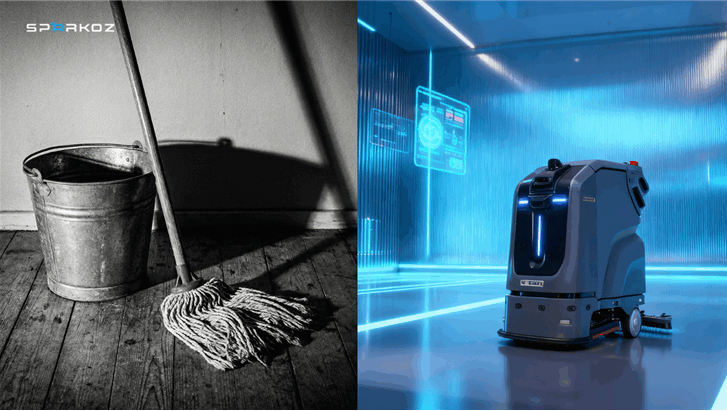
To understand why autonomous floor scrubbers are revolutionizing the industry, we must first look at the challenges they solve. The "old way" of cleaning is becoming increasingly unsustainable. Staff turnover in the cleaning sector is notoriously high, leading to constant recruitment and training costs. Furthermore, manual cleaning is inherently subjective; the quality of the job depends entirely on the energy and attention to detail of the operator at that specific moment.
In contrast, commercial cleaning automation offers stability. A robot shows up every day, never calls in sick, and adheres to a programmed standard of excellence. This reliability allows businesses to future-proof their operations against labor market volatility while ensuring their facilities remain pristine.
Redefining Efficiency in Large Spaces
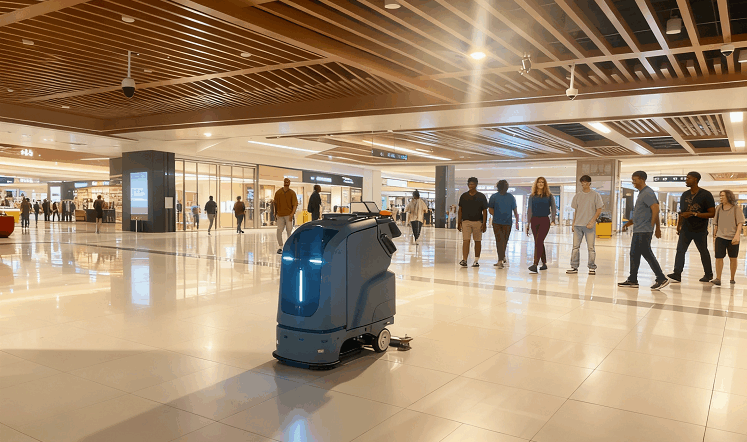
The most visible impact of this revolution is in how large environments are managed. Shopping malls, airports, and logistics centers have vast stretches of flooring that require constant attention. Manually scrubbing these areas is a slow, back-breaking process.
An autonomous floor scrubber like the Sparkoz TN70-Pro changes the equation. Designed for intelligent cleaning for large spaces, these machines can operate for hours on a single charge, covering thousands of square meters with precision. They utilize advanced navigation systems to map out the most efficient routes, ensuring no energy is wasted on redundant passes. This allows for high-frequency cleaning—scrubbing floors daily or even multiple times a day—which would be cost-prohibitive with a human crew. The result is a consistently higher level of cleanliness that enhances the customer experience and brand image.
The Data Revolution: Cleaning You Can Measure
Perhaps the most profound aspect of this revolution is the shift from "visual inspection" to "data-driven verification." In the past, a manager had to walk the floor to guess if it had been cleaned. Today, autonomous floor scrubbers provide irrefutable proof.
Through cloud-based platforms, these robots generate detailed mission reports after every shift. Facility managers can log in and see:
● Cleaning Maps: Visual representations of exactly where the robot cleaned.
● Resource Usage: Precise data on water and electricity consumption.
● Time Logs: Exact start and end times for every cleaning session.
This data is crucial for compliance in regulated industries like healthcare and food manufacturing. It transforms cleaning from a subjective service into a measurable, manageble metric.
Elevating the Human Workforce
A common misconception is that robots are here to eliminate jobs. In reality, the benefits of automated floor cleaning include a significant upgrade to the human work experience. Floor scrubbing is one of the most tedious and physically demanding tasks in facility maintenance. By offloading this repetitive burden to an autonomous floor scrubber, cleaning staff are liberated to focus on higher-value tasks.
Staff can be redeployed to handle complex duties that require human dexterity and judgment, such as deep-cleaning restrooms, dusting high surfaces, or sanitizing high-touch points like door handles and elevator buttons. This not only results in a more thoroughly cleaned facility but also leads to higher job satisfaction and lower injury rates among employees.
Sustainability and Smart Resource Management
The revolution is also green. Traditional mopping and manual scrubbing often result in the excessive use of water and harsh chemicals. Intelligent robots are programmed to be efficient. They dispense the exact amount of water and chemical solution needed for the specific floor type and soil level, drastically reducing waste.
For example, the Sparkoz TN70-Pro features an ECO mode designed to maximize run time while minimizing environmental impact. This aligns facility management with broader corporate sustainability goals, proving that a cleaner floor doesn't have to come at the planet's expense.
Conclusion: The New Standard of Clean
The adoption of autonomous floor scrubbers is no longer a futuristic experiment; it is the new standard for competitive, modern facilities. These machines provide a triple-threat advantage: they cut operational costs, improve cleaning consistency, and provide the data needed to manage facilities effectively.
As technology continues to advance, we can expect these systems to become even more integral to building management ecosystems. For businesses looking to stay ahead of the curve, the message is clear: the revolution is here, and it is time to automate. Embracing this technology is the smartest step toward a cleaner, safer, and more efficient future.
Explore the future of clean with Sparkoz's industry-leading solutions.